A Walk After Rain: Reading a Hillside for Signs of Erosion
Read hillside erosion after rain by tracing runoff, sediment, and surface marks from a safe viewpoint, without digging or disturbing the slope.
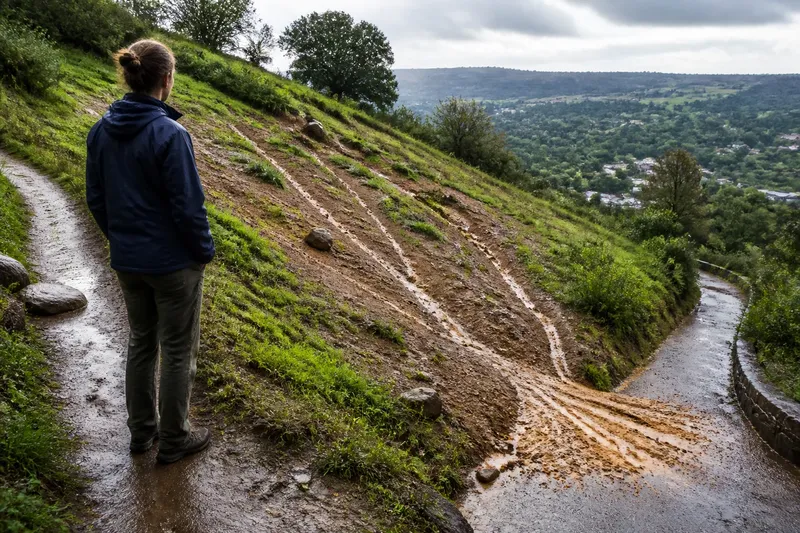
The common mistake after rain is to treat every muddy patch as evidence that a hillside is washing away. That can obscure the useful clues: where water gathered, which route it followed, and what it carried. Read hillside erosion after rain by observing those clues from a path, without digging or turning a walk into an excavation.
A hillside records water unevenly. A shallow groove may carry runoff, while a bare patch may have been exposed long before the latest shower. The aim is not to diagnose the slope from one glance. It is to connect visible marks into a plausible account of how water moved, and to notice where that account remains uncertain.
When is the ground ready to read?
Look after the rain has eased and the surface is visible, but avoid walking on saturated ground or entering a slope that feels unstable. Fresh water can make soil slick, conceal loose edges, and keep small channels actively changing. A view from a firm path or level, established lookout is enough.
Choose a spot where you can see both the upper part of the slope and its lower edge. Note the weather in plain terms: steady rain, a brief downpour, or showers with dry intervals. These conditions shape runoff, but they do not tell you how much water entered the soil. The same slope can respond differently as vegetation, soil moisture, and ground cover change.
Before interpreting anything, distinguish current wetness from the landform itself. Puddles show where water is still standing; damp soil shows where it has recently been. Neither alone proves erosion. Look for linked marks that suggest movement from one part of the slope toward another.
Where did the rainwater travel?
Start at the high side of the visible area and follow any apparent route downhill with your eyes. Runoff often concentrates where the ground is already slightly lower: along a footpath, beside a curb, in a shallow hollow, or at the edge of a compacted surface. A faint line may become clearer where it passes through loose soil or leaves.
Check whether the route is continuous. A narrow groove that begins below a roof downspout, for instance, may connect to a small fan of sediment at the slope’s foot. That link is more informative than either feature alone. If the route disappears under grass or leaves, treat the next visible mark as a possible continuation, not a confirmed one.
Look for places where water would be redirected. A trail crossing, a rock, a root, or a small ridge can split flow or send it sideways. Runoff behaves a little like a spilled drink on a tilted tray: it follows available low places, then changes course when an obstruction gets in the way. A hillside is less tidy than a tray, but the analogy keeps attention on routes rather than isolated stains.
What marks suggest soil has moved?
Several signs can support an erosion reading when they occur along a connected route:
- Rills: Small, narrow channels cut into exposed soil. Repeated parallel lines can suggest that runoff divided into several paths.
- Exposed roots or stones: These may indicate that finer material around them has been removed, though they can also result from ordinary ground cover or earlier disturbance.
- Sediment deposits: A thin smear or small fan of sand, silt, or soil below a channel may mark where flowing water slowed and dropped material.
- Scoured patches: Bare, smoother ground along a runoff route may reflect material being carried away, particularly where a deposit appears farther downslope.
- Debris lines: Leaves or fine plant fragments gathered along a shallow edge can show a temporary water level or the boundary of a small flow.
One clue can have several explanations. A bare patch might come from foot traffic, animals, maintenance, or plant loss rather than recent runoff. A sediment fan may have been left by an older shower. Confidence improves when the shape, direction, and material all fit the same account.
How can you separate runoff clues from foot traffic?
Compare the mark with its surroundings. Foot traffic often leaves repeated footprints, a flattened strip, or a path that follows a convenient route across the slope. Runoff is more likely to form branching or converging lines, carry fine material, and leave deposits where the gradient or flow weakens. These patterns can overlap: a compacted trail can collect water and then channel it downhill.
Imagine you see a narrow muddy groove beside a well-used park path, ending in a pale fan of grit. The path is compacted, so water may run along its edge; the groove and fan make that explanation plausible. But if the groove contains shoe impressions and no sediment connection, trampling may explain more of what you see. Record both possibilities rather than choosing the more dramatic one.
Also notice whether the marks align with a drainage feature such as a gutter outlet or a roadside ditch. Human-made routes can deliver water to a natural slope, while a slope can send sediment onto a path. The visible pattern may reflect an interaction, not a choice between “natural” and “human.”
How should you record what you see?
A brief note is more useful than a collection of loose impressions. Record the location in ordinary terms, the recent weather, the direction of any channels, and where sediment appears to stop. A phone photo from the same safe viewpoint can help you compare the scene after another rain. Include a stable reference, such as a path edge or large rock, so changes are easier to spot.
Keep observations separate from interpretations. “Three narrow grooves run from the bare patch toward the path” describes visible features. “The whole hillside is eroding rapidly” is a conclusion that a single walk cannot support. If the pattern changes over time, note what changed: a groove extended, a deposit appeared, or water took a new route.
Stay on durable ground, leave stones and plants where they are, and do not clear a channel to see where it leads. The purpose is to read the surface as it stands. Moving material can alter the evidence you came to observe, and wet slopes are a poor place to test one’s balance.
Which questions help interpret a hillside after rain?
Does muddy water mean the slope is eroding?
Not by itself. Muddy water shows that sediment is suspended somewhere along its route, but it may have come from a path, a disturbed patch, or an upstream source beyond your view. Look for connected channels and deposits before attributing it to the hillside in front of you.
Can grass prevent erosion?
Plant cover can interrupt raindrop impact and slow shallow runoff, while roots help hold soil in place. Its effect depends on the ground beneath it and the route water takes, so a green surface does not rule out concentrated flow in a hollow or along a path edge.
What is the difference between a rill and a gully?
A rill is a small runoff channel that can be smoothed by ordinary surface disturbance, while a gully is a larger, more established channel that is not readily erased that way. For a casual observation, describing a channel by its visible shape and continuity is safer than assigning a formal category from one visit.
When should I leave the slope and alert someone?
Leave if the ground is sliding, cracking, slumping, or sending water and debris across a place people use. Report a concerning change to the land manager, property owner, or local public works contact rather than approaching it to inspect more closely; a qualified geotechnical professional may be needed for a serious slope concern.
What can one walk tell you, and what can it not?
One walk can show where water likely concentrated during a recent rain, which surfaces supplied loose sediment, and where that material settled. It cannot establish how often the process occurs, whether the slope is stable, or how much soil has moved over time. Those questions require observations across changing conditions and, where decisions about safety or property are involved, appropriate professional assessment.
For a useful next visit, return to the same viewpoint after another rain and compare the visible routes rather than searching for a dramatic new mark. If channels and deposits recur in the same places, that pattern is a stronger clue about how the hillside directs water. Reading hillside erosion after rain is most informative when the record stays modest: note what the ground shows, preserve what you cannot yet tell, and let the next shower add another line to the evidence.